Under a clean kitchen towel on the cool counter, a cold melon cake waits to greet everyone who walks through the back door on a hot summer afternoon.

This beautiful Classic Watermelon Fruit Cake brings people together without ever turning on the hot oven. Our family loves how a simple piece of fruit can become the center of a Sunday table. You only need a sharp knife, a sturdy cutting board, and a heap of sweet berries to make this happen. It is the kind of cold treat that makes memories on a porch swing while the radio plays in the background.
What Makes Our Classic Watermelon Fruit Cake Real Comfort
Prep: 15 min · Serves: 10 · Difficulty: Easy
- Cool dessert for warm summer days
- No hot oven or heavy baking pans
- Honest sweetness from natural ripe fruit
- Fun activity for grandchildren to help
This cold dessert gives you a beautiful centerpiece with no fuss, honest flavor. It has the same satisfying presence as a traditional layered treat, much like our old-fashioned classic fruitcake recipe that sits under a glass dome during the colder months. You will find yourself making this every time the humidity rises.
Preparing this dessert is a peaceful ritual that slows down a busy afternoon. There is no waiting for a timer to buzz or worrying about a cake sinking in the middle. You can work at your own pace, letting the sweet juices pool on the cutting board while you listen to the birds outside. It is simple comfort from the heart that anyone can master.
Get The Full Cake Recipe
Print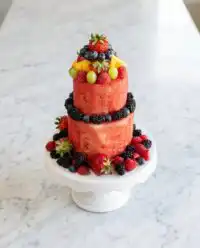
Classic Watermelon Fruit Cake
- Total Time: 15 mins
- Yield: 10 servings
- Diet: Vegan, Gluten-Free, Dairy-Free
Description
This refreshing, no-bake dessert uses stacked, carved seedless watermelons as a foundation for a beautiful, fruit-topped centerpiece. It is a cooling, naturally sweet treat perfect for staying comfortable during the hottest days of summer.
Ingredients
- 2 large seedless watermelons
- 1 quart mixed berries (strawberries, blackberries, and blueberries)
- 2 fresh kiwis, thinly sliced
- 1 bunch fresh mint leaves
Instructions
- Prepare the workspace. Clear your cutting board and secure it with a damp towel underneath, keeping a sharp chef knife and a collection platter nearby.
- Trim the base. Slice the ends off the first watermelon, remove the rind, and carve it into a flat-topped cylinder roughly eight inches in diameter.
- Carve the tier. Trim the second watermelon to remove the rind, then carve a cylinder that is three inches smaller than your base tier.
- Stack the tiers. Place the smaller melon tier centered on top of the base layer, then secure them together by inserting three wooden skewers through the center, trimming any excess.
- Border the base. Arrange blackberries and blueberries around the bottom perimeter of the base, and press halved strawberries into the seam between the two tiers.
- Decorate the cake. Artfully pile the remaining berries and kiwi slices on the top tier, tucking in fresh mint leaves to complete the display.
Notes
- Ensure the melons are chilled for at least four hours before carving to keep the structure firm and easy to shape.
- Pat the exterior of the carved melon cylinders dry with a paper towel so the berries adhere to the sides without sliding.
- Use a freshly sharpened, non-serrated knife and wipe the blade clean between cuts for perfect, professional-looking slices.
- Save the leftover melon scraps to blend into chilled summer soups or to freeze as refreshing ice cubes for beverages.
- Prep Time: 15 mins
- Cook Time: 0 mins
- Category: Dessert
- Method: No-bake
- Cuisine: American
Simple Ingredients
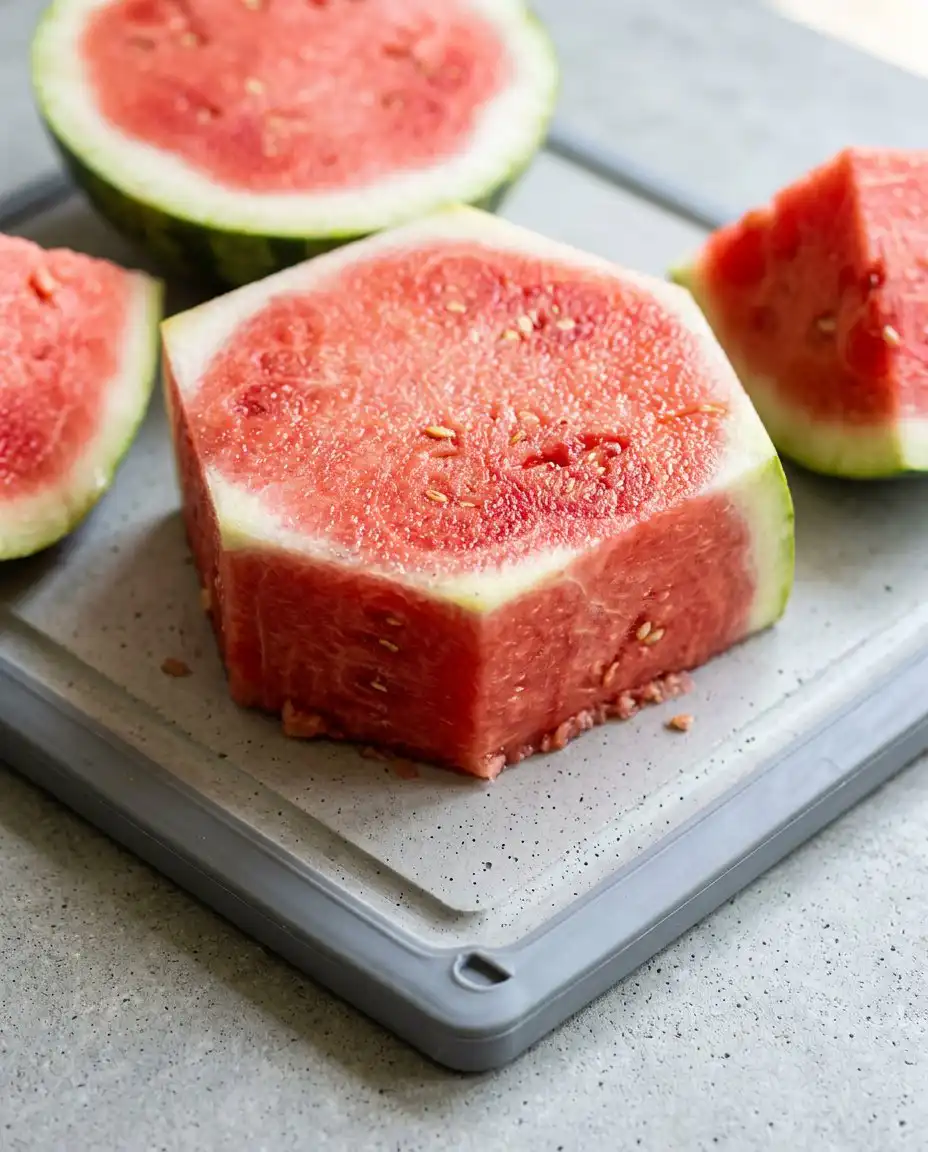
When you are not baking with flour and butter, the quality of your fresh produce carries the whole show. You want to pick melons that feel heavy for their size and sound hollow when you give them a gentle knock. The berries should look bright and plump, as if they were hand-gathered from a backyard patch this very morning. Choosing local fruit means you get the best sweetness possible, which makes a world of difference in a cake that relies entirely on nature’s pantry. Take your time at the market, smelling the melons and checking the berry boxes for any bruised spots before making your final selection.
- Seedless Watermelons: Choose two melons with a bright yellow field spot to make sure they are fully sweet and ripe.
- Mixed Berries: Use strawberries, blackberries, and blueberries to create a deep contrast against the pale pink melon base.
- Fresh Kiwi: Slice these green rounds thinly to add a pleasant tartness that cuts through the deep sweetness of the melon.
- Fresh Mint: Pull these tender leaves right from the stem to add a cool aroma and a touch of garden green.
| Ingredient | Why It Matters |
|---|---|
| Seedless Watermelons | Creates the sturdy base and tiers of the dessert |
| Mixed Berries | Adds natural sweetness, rich colors, and varied texture |
| Fresh Kiwi | Offers a bright tart contrast to balance the sweet melon |
| Fresh Mint Leaves | Provides a beautiful garden scent and clean finish |
Selecting your fruit is half the joy of this simple summer dessert. You want to visit a local farm stand if you can, looking for pieces that have not traveled too far from their vines. A good melon will yield under your knife with a satisfying crisp snap, filling your workspace with that clean, sweet perfume of high summer.
The Simple Method
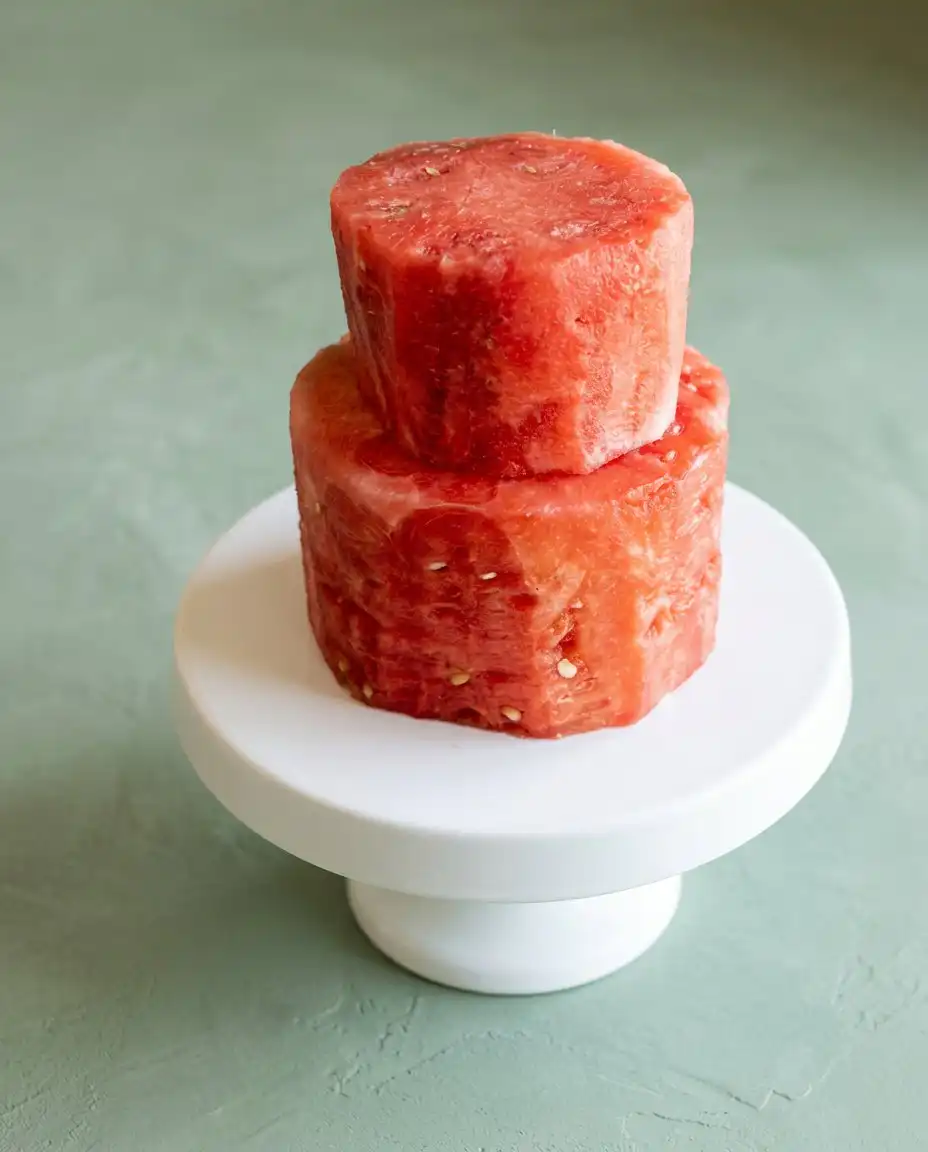
Step 1: Prepare Your Large Cutting Workspace
Clear off your largest wooden cutting board and set a damp kitchen towel underneath to keep it from sliding. You will need a long, sharp chef knife to make clean cuts through the thick melon rinds without slipping. Keep a clean platter nearby to collect your scraps for snacking later. This setup guarantees you can work safely and comfortably without any sticky juice running onto your kitchen counters.
Step 2: Slice the Base of Your Melon Cake
Cut the top and bottom off your first large watermelon so it stands flat on your board. Carefully slide your knife down the sides from top to bottom, removing the green rind and the white pith to reveal the deep pink flesh. Shape this piece into a round cylinder that looks like an eight-inch cake layer. You want to make sure the sides are as straight and even as possible to support the weight of the next tier.
Step 3: Carve the Second Tier of the Melon Cake
Take your second watermelon and repeat the trimming process to remove all of the outer green skin. Cut this second cylinder so it is about three inches smaller in diameter than your bottom base piece. Place this smaller melon tier directly in the middle of your wider base layer so it stands straight. This tiered structure mimics a traditional wedding cake, creating a beautiful height that naturally draws the eye.
Step 4: Secure the Tiered Layers Together
Press three wooden skewers down through the center of both tiers to prevent the top layer from sliding when you move the platter. Trim any excess wood off the top of the skewers with kitchen shears so they stay completely hidden inside the fruit. Give the structure a gentle wiggle to make sure it feels sturdy and level. This simple trick keeps your tiers secure, even if you have to carry the dessert out to a picnic table in the yard.
Step 5: Arrange Your Base Berry Border
Scatter your darkest blackberries and blueberries around the very bottom edge of the melon base where it meets the serving plate. This ring of deep blue fruit acts like a border of frosting, hiding any uneven cuts at the bottom of your cake. Press a few halved strawberries into the seam between the two tiers for extra color. This step adds a touch of contrast that makes the pink melon stand out beautifully.
Step 6: Decorate Your Classic Watermelon Fruit Cake with Fresh Berries
Pile the remaining berries and sliced kiwi pieces artfully on top of the upper melon tier, letting them cascade slightly over the edge. Tuck fresh mint leaves into the small gaps between the fruits to create a lush, abundant look. Let the juice pool naturally on the platter to give the dessert a beautiful, glistening finish before carrying it to the table. Your guests will marvel at how colorful and inviting the completed fruit cake looks under the afternoon light.
Plain-Kitchen Notes
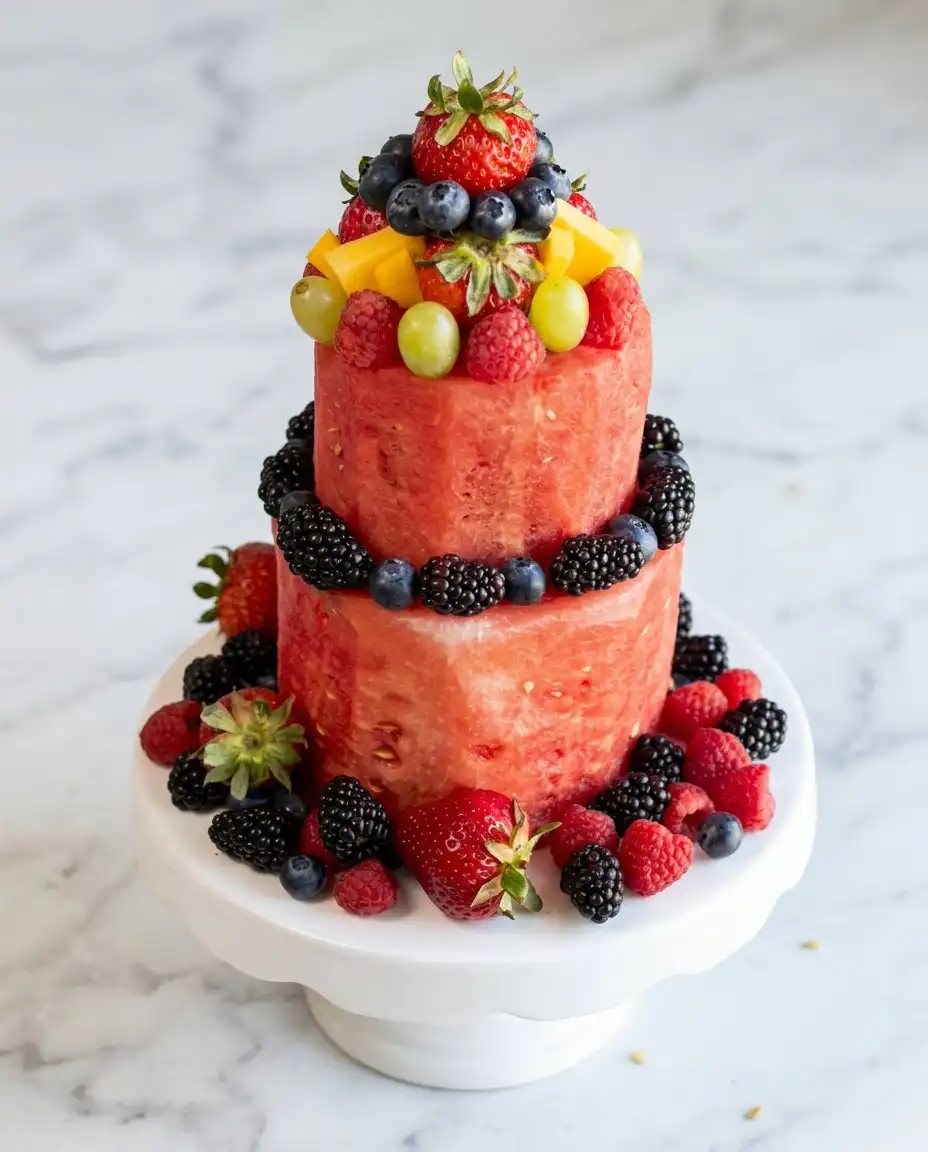
Selecting the right melon makes all the difference when you are not relying on sugar to hide mistakes. If your melon feels light or sounds dull when tapped, it might be dry inside, which will cause your tiers to crumble under the knife. A truly ripe melon will have a large, creamy yellow spot where it rested on the warm Southern dirt. Look for a dull skin rather than a shiny one, as shine often indicates an underripe melon.
You can read our fresh watermelon layer cake story to see how different melon varieties behave under a knife. Using seedless varieties is highly recommended because black seeds can make carving difficult and ruin the appearance of your clean slices. Keep your melon chilled in the refrigerator for at least four hours before you begin carving. Cold melon is much firmer and holds its shape better than fruit kept at room temperature.
If your tiers begin to slide or tilt, here is why and how to fix it: your cuts were not completely level, or the skewers are placed too far apart. To fix this, slide a thin piece of leftover melon rind under the low side of the top tier to level it, then add a central skewer for stability. You can also consult this helpful watermelon carving guide for professional tips on handling summer melons. Having a stable foundation guarantees your cake can travel safely to any backyard table.
Dry the outside of your carved melon cylinders with a clean paper towel before you attempt to attach the decorative berries. This simple step removes excess moisture and allows the sliced fruit to stick naturally to the sides without sliding down. If you skip this, your beautiful berry border may slide off onto the platter before you can serve it. Taking a few seconds to pat the surface dry is a secret that professional food stylists always use.
Keep your scraps of melon rind and inner flesh in a container in the icebox for later. They are wonderful for making cold drinks, or you can blend them into a cooling summer soup for the next afternoon. Nothing goes to waste in a thrifty kitchen, and those sweet leftovers are equally good as the cake itself. You can also freeze the scraps to use as ice cubes in your sweet tea.
When it is time to serve, use a long, non-serrated carving knife that is freshly sharpened. Wipe the blade with a damp kitchen towel between each slice to make sure the cuts look neat and tidy. A clean blade will slide right through the fruit without tearing the delicate berry toppings. This small extra effort makes every single slice look like a masterpiece on the plate.
Frequently Asked Questions
How do I store a watermelon fruit cake if we have leftovers?
You can keep any remaining slices in a covered container in your refrigerator for up to two days. Keep in mind that the melon will naturally shed water over time, so you may need to drain the container before serving. It is best to eat the carved fruit within twenty-four hours for the very best texture.
Can I make this dessert the day before my summer gathering?
You can carve the melon tiers the evening before, but you should wait to assemble the decorative berries until a few hours before serving. Store the carved melon cylinders wrapped tightly in plastic wrap in your refrigerator. This keeps the melon from drying out and guarantees your berries look fresh and bright when guests arrive.
Is it possible to freeze this melon cake for later?
We do not recommend freezing this dessert because freezing completely changes the cellular structure of watermelon. Once thawed, the melon tiers will become mushy and lose all of their pleasant, crisp texture. It is truly best enjoyed fresh and cold straight from the refrigerator.
What are the best tools to carve the melon tiers?
You only need a long, sharp chef knife to trim the outer rind and shape the tiers. A small paring knife is helpful for cutting precise details or trimming any remaining white pith. Avoid using serrated knives, as they can tear the delicate flesh of the melon and leave rough edges.
Can I use toothpicks instead of wooden skewers to hold the tiers?
Toothpicks are generally too short to secure two large, heavy tiers of watermelon. Long wooden skewers provide the deep support needed to keep the top tier from shifting during transport. Make sure to tell your guests about the skewers before you begin slicing the cake.
How do I choose the sweetest watermelon at the market?
Look for a melon that feels very heavy for its size, which indicates that it is full of sweet juice. It should have a dull skin rather than a shiny one, and a creamy yellow spot on one side. A hollow, deep thump when you tap it with your knuckles is another classic sign of ripeness.
What other fruits can I use to decorate the sides?
Halved strawberries, fresh raspberries, and thin slices of peaches or plums stick beautifully to the sides of the melon. You can also use small melon baller tools to create colorful cantaloupe and honeydew spheres to scatter around the base. Anything sweet and colorful from your garden will work beautifully.
Family Variations
You can easily adapt this cold dessert to whatever fruit is growing in your backyard or sitting on your pantry shelf. One popular twist is to spread a thin layer of thick, sweetened Greek yogurt or whipped cream cheese frosting over the melon tiers before adding the fruit. This makes the dessert look even more like a traditional baked treat while adding a rich, creamy contrast to the crisp melon.
If you want a deeper chocolate profile for a special birthday, you can drizzle cooled, melted dark chocolate over the cold berries. This variation mimics the rich appeal of our popular chocolate fruit cake while keeping the refreshing quality of the fresh melon intact. It is a wonderful way to satisfy chocolate lovers without turning on the oven on a hot July afternoon.
Another lovely choice is to use a hollowed-out pineapple cylinder as the middle tier between two melon layers. This adds a beautiful golden color and a bright, tropical flavor that pairs wonderfully with the sweet red watermelon. Decorate the edges with toasted coconut flakes to give the entire presentation a lovely, rustic texture.
At the Kitchen Table
Serving this cold dessert is an occasion in itself, especially when the summer heat is at its peak. Carry the platter to the table with a sharp knife and a wide cake server, letting everyone admire the colorful tiers before you cut. It is a wonderful centerpiece for a backyard barbecue, a Sunday potluck, or a quiet family supper on the porch.
Pair each crisp slice with a tall glass of iced sweet tea or cold lemonade to complete the Southern hospitality. If you are hosting a larger gathering, you can serve this alongside a traditional baked cake with fruit to give your guests both warm and cold options. The contrast between a classic crumb and this juicy, cold melon is always a hit.
We like to place a small bowl of fresh whipped cream or a pitcher of sweet berry coulis on the table so folks can drizzle a little extra comfort over their portions. A light dusting of powdered sugar right before slicing adds a touch of magic that makes children wide-eyed with excitement. It is a simple, honest way to celebrate the abundance of the summer season.

Keep This One Close
This cold melon cake proves that you do not need a hot oven or a complicated recipe card to bring joy to your kitchen table. Simple ingredients and a little bit of care are all it takes to make something truly memorable. We hope this fresh treat becomes a regular part of your summer traditions, bringing sweet relief on the hottest days of the year.
If you are looking for more garden-inspired ideas, you can read about our fruit garden guide to see what else you can plant for future desserts. Nothing quite compares to the simple satisfaction of sharing clean, natural food with the people you love. Please share your own beautiful melon creations with us on our social pages and let us know how your family enjoyed this cool treat.
You can find more inspiration and connect with our baking community on our Pinterest and follow our updates on Facebook. We also share quick kitchen ideas on our Telegram channel. Until next time, keep your kitchen cool and your heart full of simple comforts.