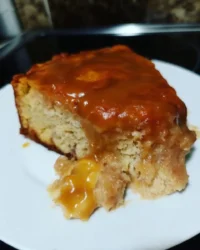
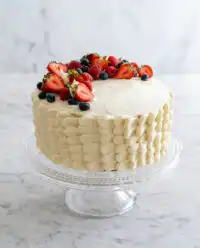
I invite you to play with your spices by blooming cinnamon in melted butter to create a fragrant base that turns a basic cake into a fruit-filled memory.

Making an Old-Fashioned Peach Cobbler Pound Cake Recipe is about finding the balance between a dense, buttery crumb and the syrupy warmth of summer fruit. This recipe relies on a single smart addition of brown sugar and cinnamon to create a flavor pop that mimics the crust of a classic cobbler. By layering these elements into a traditional bundt, you create a dessert that feels both nostalgic and fresh for modern kitchens.
What Makes This One Special
Prep: 25 min · Serves: 4 · Difficulty: Easy
- Buttery crumb meets juicy cinnamon fruit.
- Cream cheese adds a tangy richness.
- Golden crust with a tender center.
- Simple ingredients create a memorable treat.
- Effortless method for a classic dessert.
This is the recipe my guests ask about long after the last slice vanishes because it feels like a cozy kitchen hug. Much like an ooey gooey butter cake, the texture here provides a satisfying weight that carries the fruit beautifully.
Get The Full Cake Recipe
Print
Old-Fashioned Peach Cobbler Pound Cake
- Total Time: 2 hours 15 mins
- Yield: 12 servings
- Diet: Vegetarian
Description
This decadent pound cake combines a dense, buttery crumb with a caramelized brown sugar and cinnamon peach base. It is the perfect nostalgic dessert that blends the comfort of a classic pound cake with the syrupy warmth of a fruit cobbler.
Ingredients
- Cake flour
- Cream cheese
- Canned peaches
- Brown sugar
- Cinnamon
- Eggs
- Sour cream
- Pure vanilla extract
- Butter
Instructions
- Prepare the pan. Preheat your oven to 325°F and thoroughly coat a 12-cup Bundt pan with nonstick spray, then slice peaches and arrange them in the bottom of the pan.
- Make the base. Whisk melted butter, brown sugar, and cinnamon into a paste and drizzle it over the peach wedges.
- Aerate the fats. Beat the softened butter and cream cheese on high speed for three minutes until light and fluffy, then mix in sugar.
- Add liquid flavor. Incorporate sour cream and vanilla extract into the butter mixture until smooth, scraping down the bowl as needed.
- Emulsify the eggs. Add the six eggs one at a time, beating thoroughly after each addition to ensure a stable and voluminous batter.
- Combine and bake. Fold in the dry ingredients and chopped peaches, pour into the pan, and bake for 80 to 90 minutes until a tester comes out clean.
- Cool and invert. Let the cake rest in the pan for one hour before carefully inverting it onto a serving plate to reveal the peach topping.
Notes
- Ensure all dairy ingredients are at room temperature to prevent a gummy texture at the base of the cake.
- Use a kitchen scale or spoon-and-level method when measuring flour to keep the crumb tender rather than dry.
- Stop the mixer immediately once the flour is incorporated to avoid overworking the gluten.
- Utilize a flour-based cooking spray to guarantee the caramelized peach layer releases cleanly from the Bundt pan.
- Prep Time: 25 mins
- Cook Time: 90 mins
- Category: Dessert
- Method: Baking
- Cuisine: Southern
Pantry & Spice Drawer
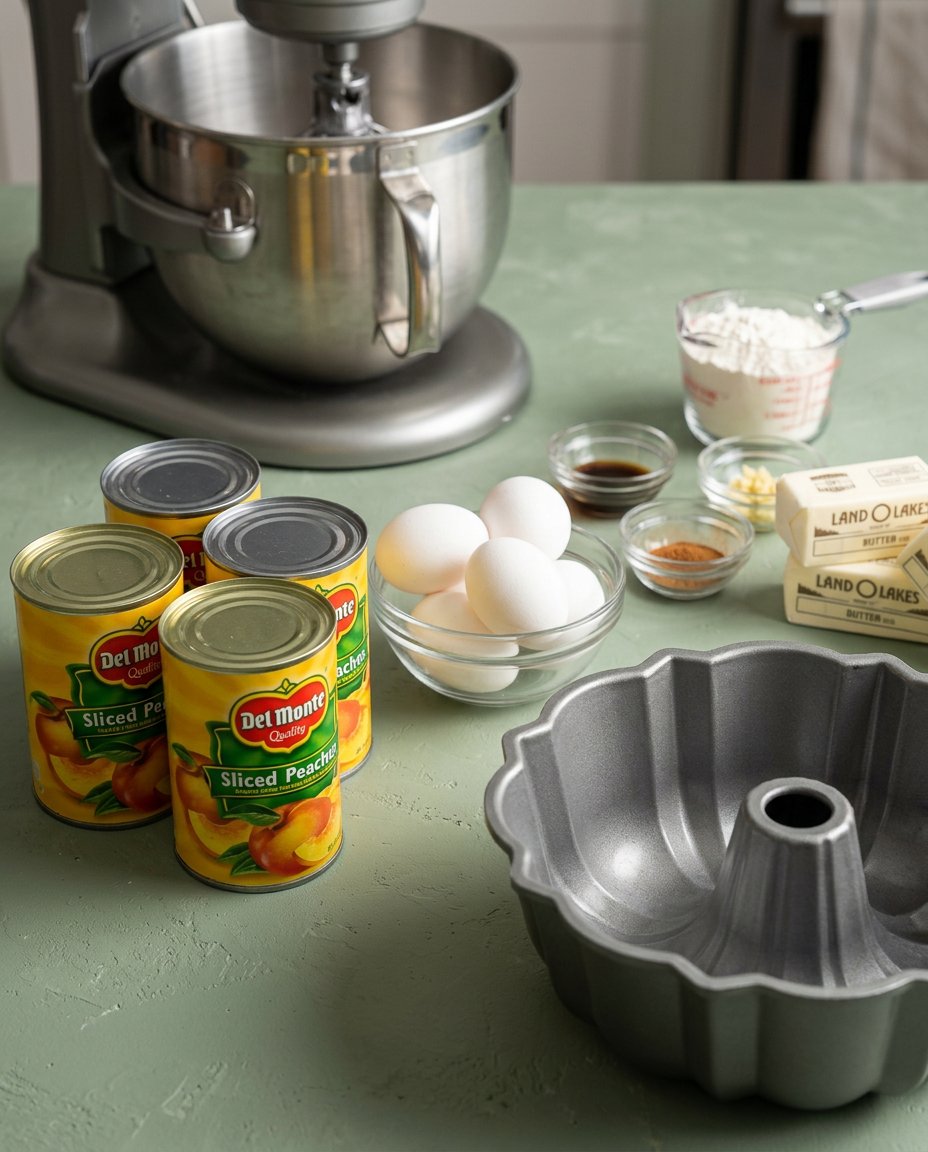
Selecting the right items for your flavor lineup ensures the fruit shines without making the crumb too soggy. You want ingredients that provide structure while allowing the warm baking spices to bloom during the long bake time.
- Cake Flour: This low-protein flour creates a fine, velvety texture that keeps the cake from feeling heavy or bread-like.
- Cream Cheese: Adding this provides a subtle tang and a dense moisture that ordinary butter cakes often lack.
- Canned Peaches: Using canned fruit allows for a consistent sweetness and soft texture that integrates perfectly into the batter.
- Cinnamon and Brown Sugar: These two create the classic cobbler topping flavor that seeps into the bottom of the pan.
- Eggs: Using six whole eggs provides the necessary lift and rich yellow color characteristic of a true pound cake.
| Ingredient | Why It Matters |
|---|---|
| Cake Flour | Provides a tender and delicate crumb structure |
| Cream Cheese | Ensures a dense, moist, and creamy mouthfeel |
| Brown Sugar | Creates a caramelized syrup layer on the fruit |
| Sour Cream | Adds acidity to balance the sugar and fat |
| Pure Vanilla | Lifts the floral notes of the peaches |
Building the Flavor
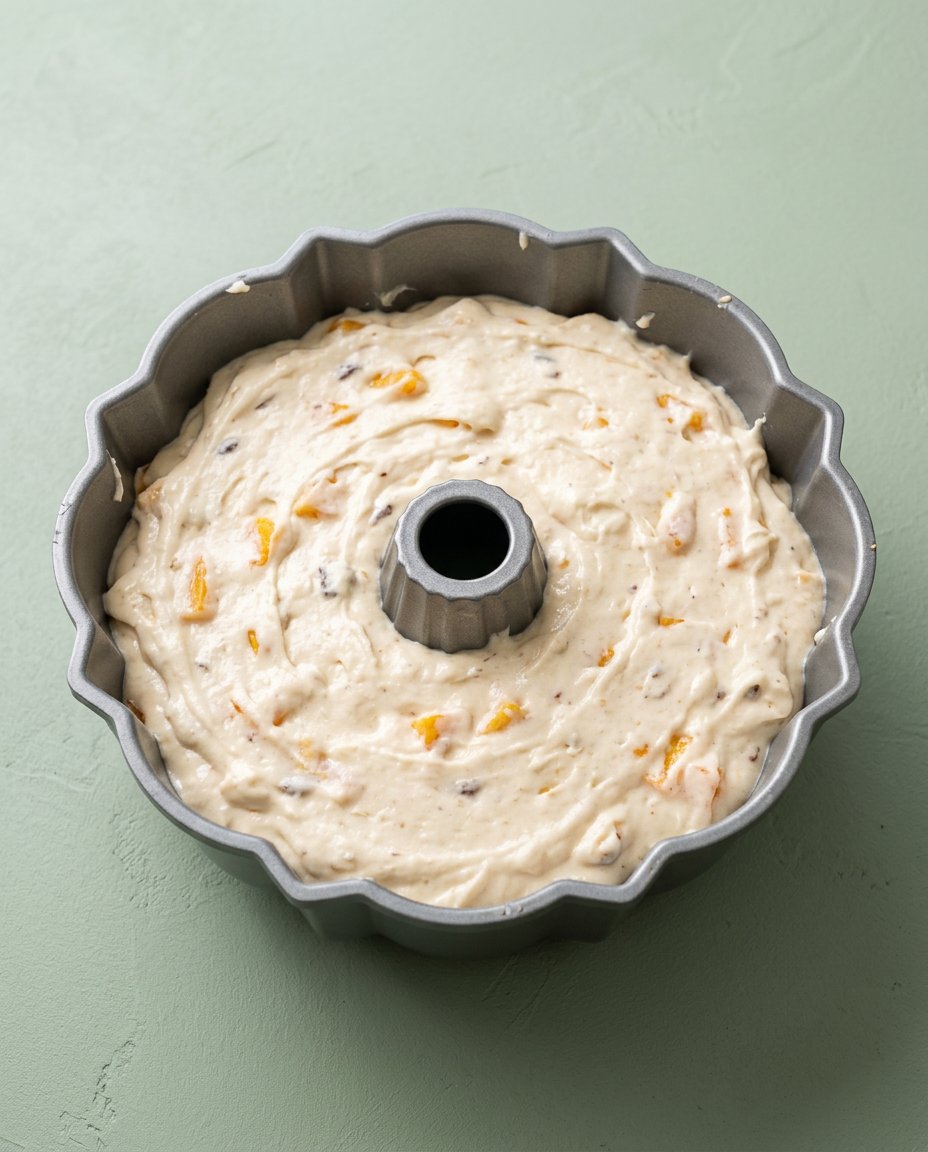
Step 1: Prep Your Pan and Fruit
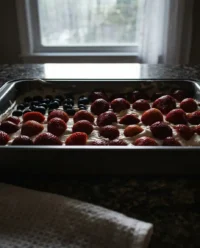
Begin by preheating your oven to 325°F and thoroughly coating a 12-cup Bundt pan with nonstick spray to prevent any sticking. Peel and slice your peaches, placing elegant wedges at the base of the pan while chopping the remaining fruit into small cubes for the batter. The fruit should look glossy and feel soft as you arrange it in the bottom of the vessel.
Step 2: Create the Cobbler Base
Whisk the melted butter with brown sugar and cinnamon in a small bowl until it forms a thick, fragrant paste. Drizzle this mixture over the peach wedges in the pan so it can caramelize into a rich syrup during the baking process. The scent of warm cinnamon should be immediate as the sugar dissolves into the fat.
Step 3: Aerate the Butter and Cream Cheese
Place the softened butter in a large bowl and beat on high speed for two minutes until it appears pale ivory and light. Incorporate the cream cheese and beat for another minute, followed by the sugar, until the mixture feels fluffy and well-aerated. This step builds the foundation for a cake that is dense but never heavy.
Step 4: Incorporate Liquid Flavor Elements
Add the sour cream and vanilla extract to the bowl, beating on high speed until the batter looks smooth and creamy. The vanilla should smell floral and sweet, cutting through the richness of the dairy elements. Scrape the sides of the bowl to ensure every bit of the mixture is fully combined before moving forward.
Step 5: Emulsify the Eggs
Crack the eggs into the batter one at a time, beating thoroughly after each addition until the yellow yolk disappears into the pale cream. Taking your time here prevents the batter from breaking and ensures a stable structure for the fruit. The mixture should appear voluminous and glossy once all six eggs are fully integrated.
Step 6: Bake Your Old-Fashioned Peach Cobbler Pound Cake Recipe to Perfection
Fold the chopped peaches and dry ingredients into the bowl on low speed until the white streaks of flour are gone. Pour the batter over the prepared fruit and tap the pan on the counter to release trapped air before baking for eighty to ninety minutes. You will know it is ready when the edges pull away from the pan and a tester comes out clean.
Step 7: Cool and Release
Allow the cake to sit in the pan for exactly one hour so the delicate crumb can set properly. Carefully invert the pan onto a serving plate and lift it slowly to reveal the caramelized peach topping. The cake should slide out easily, releasing a cloud of sweet, fruity steam as it settles onto the plate.
How to Layer the Flavor
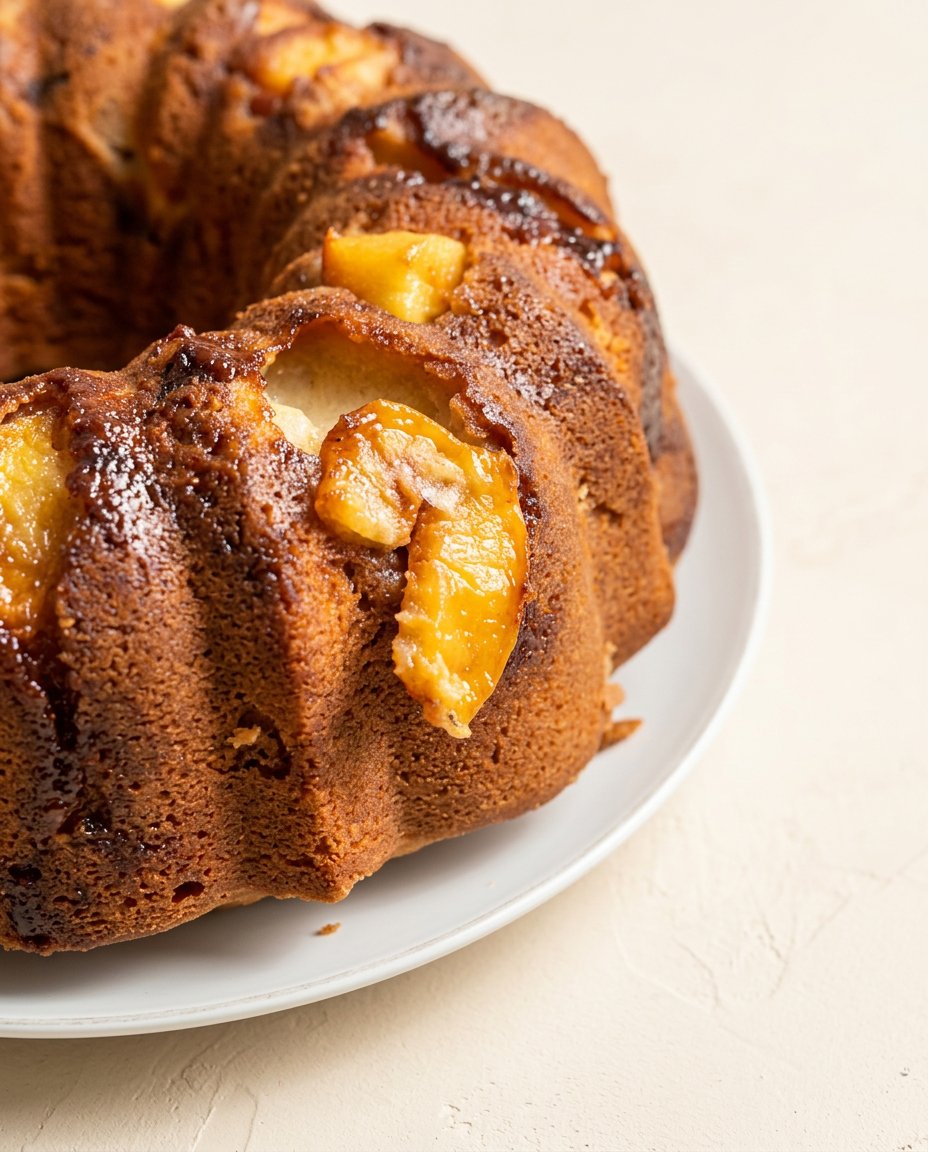
To ensure your cake releases from the pan without leaving the beautiful peaches behind, use a spray that contains flour or brush the pan with a mixture of melted shortening and flour. This creates a reliable barrier that handles the sticky syrup from the brown sugar and fruit juices.
Temperature is vital when working with cream cheese and butter, so let them sit on the counter for at least two hours before you begin. If these ingredients are too cold, they will not aerate properly, leading to a cake that has a gummy layer at the bottom.
If your cake feels heavy or gummy in the center, check your oven temperature and mixing time to ensure you didn’t deflate the air bubbles. Using an oven thermometer can help you verify that you are baking at a true 325°F, which is essential for such a deep cake.
When adding the dry ingredients, stop the mixer the moment the flour is incorporated to avoid developing too much gluten. Overworking the batter results in a tough, rubbery texture rather than the tender melt-in-your-mouth crumb found in a lemon pound cake.
Measure your flour by fluffing it with a spoon and leveling it off with a knife to avoid packing too much into the cup. Excess flour is the most common reason for a dry cake that crumbles when you try to slice it.
For a deeper understanding of regional techniques, you can look into southern peach baking traditions to see how different fats affect the final result. Understanding the history of the pound cake helps you appreciate the ratio of ingredients used in this modern twist.
Frequently Asked Questions
Can I use fresh peaches instead of canned?
Yes, you can use fresh peaches, but ensure they are very ripe and soft to mimic the texture of canned fruit. Peel them and toss them in a little extra sugar and cinnamon before placing them in the pan. If the fresh fruit is too firm, it may not soften enough during the bake time.
How do I store this cake to keep it moist?
Keep the cake in an airtight container at room temperature for up to three days. For longer storage, you can refrigerate it for a week, though it is best served at room temperature to maintain the soft texture of the butter. The fruit topping will stay moist as long as the cake is properly covered.
Why did my peaches sink to the middle?
If your chopped peaches are too large or heavy, they might migrate through the batter during the long bake. To prevent this, chop the fruit into small bite-size cubes and toss them in a tablespoon of cake flour before folding them in. The flour helps the fruit grip the batter so it stays evenly distributed.
Can I freeze this cake for later?
This cake freezes beautifully once it has cooled completely on the wire rack. Wrap individual slices or the whole cake in plastic wrap and then a layer of foil to prevent freezer burn. Thaw it at room temperature for several hours before serving to restore the tender crumb.
What if I do not have a Bundt pan?
You can use two standard loaf pans if a Bundt pan is unavailable in your kitchen. Divide the fruit and batter evenly between the two pans and reduce the baking time to approximately fifty-five minutes. Check the center with a toothpick frequently as loaf pans bake faster than a large ring mold.
How do I prevent the top from burning?
Since this cake bakes for a long time, the top can sometimes become too dark before the center is done. If you notice the crust browning too quickly, loosely tent a piece of aluminum foil over the top of the pan. This allows the heat to continue cooking the interior without scorching the surface.
Where to Take It Next
One smart addition, all the wow comes from playing with the extract shelf in your pantry by swapping vanilla for almond. The nutty, cherry-like notes of almond extract pair beautifully with peaches and give the cake a professional bakery finish that guests will notice. You can also use a yellow cake recipe as a base if you want to experiment with a lighter, fluffier texture instead of a dense pound cake.
Consider browning the butter before mixing it with the cinnamon and sugar to add a toasty, caramel-like depth to the fruit layer. This small change creates a more complex flavor profile that contrasts with the sweet peaches and tangy cream cheese.
You can also lean into a floral profile by adding a teaspoon of rose water or orange blossom water to the batter. These scents highlight the natural perfume of the fruit and turn a simple afternoon tea snack into something truly memorable.
Pair It Up
This cake shines when served with a dollop of unsweetened whipped cream or a generous scoop of vanilla bean ice cream. The cold dairy provides a beautiful contrast to the warm cinnamon notes and the dense crumb of the cake. You can also drizzle a bit of warm caramel sauce over each slice to emphasize the toasted sugar flavors from the peach layer.
For a bright morning treat, try serving a slice alongside a cup of hot black tea or a bold espresso. The acidity of the coffee cuts through the richness of the butter and cream cheese, making every bite feel light. If you are hosting a summer brunch, this dessert pairs wonderfully with a fresh peach cake or a platter of seasonal berries.
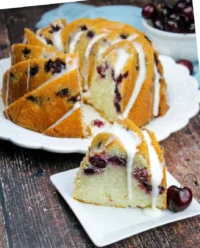
Plating the cake on a vintage pedestal stand adds to the old-fashioned charm of the recipe. Slicing it into thick wedges allows the fruit to be the star of the presentation, especially if the syrup has pooled slightly around the base. Guests will appreciate the rustic yet elegant look of the golden crust against the bright fruit.
Your Turn to Riff
Baking this cake is a wonderful way to bring a sense of comfort into your home with a flavor pop that feels timeless. The combination of dense pound cake and syrupy peaches creates a texture that is difficult to resist. I hope you feel encouraged to take this recipe and make it your own by experimenting with different spices or extracts from your own pantry.
If you find yourself with extra fruit, you might also enjoy making a peach dump cake for a quicker weeknight alternative. Every recipe is just a starting point for your own kitchen curiosity, so do not be afraid to play with the ratios. Simple cake, unforgettable flavor is always the goal when we gather around the table.
I would love to see your results, so please share your photos and stories with the community. You can follow our latest bakes on Pinterest, join the conversation on Facebook, see the process on TikTok, or get quick updates on Telegram. Happy baking and keep riffing.